
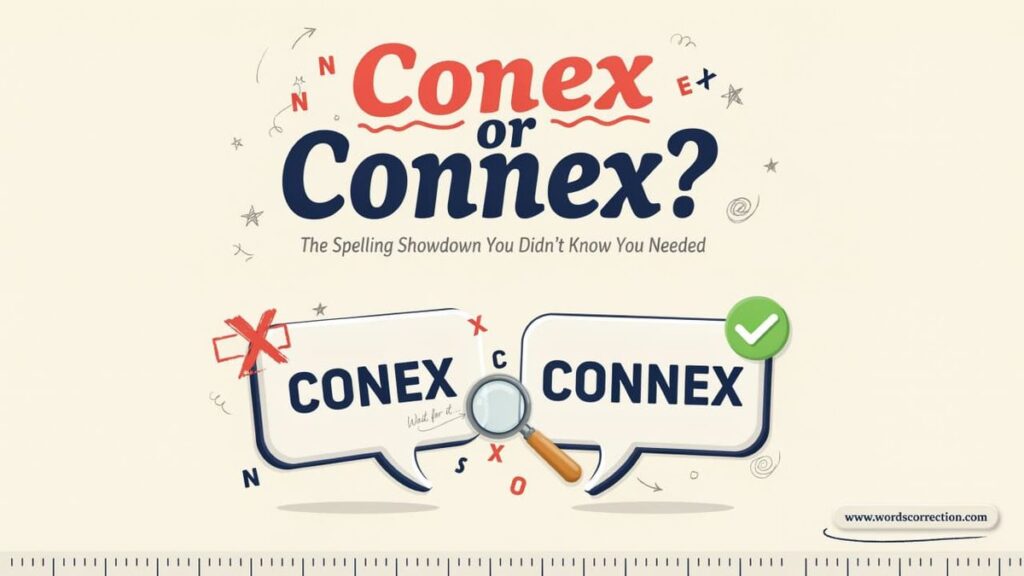
The difference between Conex vs Connex can be confusing, especially when both spellings refer to the same type of metal cargo or storage container. Is one spelling correct and the other a mistake? Or are they simply two versions of the same word? The good news is that you don’t need to guess. Both spellings are recognized, but they have different historical backgrounds and usage. Understanding these differences will help you choose the right word and avoid common spelling mistakes. Let’s explore their meanings, origins, and correct usage in simple terms.
Conex vs Connex Quick Answer
Conex and Connex generally describe the same type of large metal cargo or storage container. The main difference is their spelling and historical background.
| Feature | Conex | Connex |
|---|---|---|
| Spelling | Original military-associated spelling | Recognized alternative spelling |
| Origin | Derived from Container Express | Alternative respelling of Conex |
| Meaning | Large metal cargo or storage container | Large metal cargo or storage container |
| Usage | Common in the United States | Also used in the United States |
| Pronunciation | KAH-neks | KAH-neks |
| Formal recognition | Established historical term | Recognized dictionary variant |
In most modern situations, both spellings communicate the same meaning. However, Conex is the more historically accurate choice when discussing the original military container system.
What Does Conex Mean?
Conex refers to a large, durable metal container designed to transport and store supplies, equipment, and other goods. The word comes from the military abbreviation Container Express, which became associated with the United States military’s efforts to improve cargo transportation.
These containers became especially important because they provided a practical way to move supplies over long distances while protecting them from weather, damage, and handling problems.
Modern Conex containers are commonly made from steel. They usually feature reinforced walls, secure doors, and a strong frame that allows them to withstand demanding transportation and storage conditions.
History of the Conex Container
The history of Conex containers is closely connected to military logistics during the mid-20th century.
Before standardized cargo containers became widely available, transporting military supplies involved considerable manual handling. Workers often had to load and unload individual packages, which increased labor costs and slowed down transportation.
The United States military needed a more efficient system for moving equipment, food, ammunition, and other essential supplies.
The Container Express system helped address this challenge. The military developed standardized metal containers that could hold large quantities of supplies and move through transportation networks more efficiently.
The system gained importance during the Korean War in the early 1950s. Military forces used these containers to transport essential materials while reducing handling time and improving supply management.
Over time, containerization influenced commercial transportation. Standardized shipping containers eventually became an important part of international trade and modern logistics.
Why Were Conex Containers Developed?
The original military container system addressed several practical problems
- Faster transportation: Containers made it easier to move large quantities of supplies.
- Better protection: Strong metal construction protected goods from weather and physical damage.
- Improved organization: Standardized containers helped military personnel manage equipment and supplies.
- Reduced handling: Workers could transport grouped supplies instead of handling every item separately.
- Greater efficiency: The system helped simplify loading, unloading, and storage operations.
These advantages helped establish containerization as an important part of modern transportation.
Learn the difference between tricky words and use them correctly
Stigmatism vs Astigmatism Which Term Is Correct?
What Does Connex Mean?
Connex is an alternative spelling of Conex. It refers to the same general type of large metal cargo or storage container.
The spelling appears in English dictionaries and is recognized as a variant of Conex. It is also used in phrases such as Connex box and Connex container.
Although Connex is not the original spelling associated with the military abbreviation Container Express, it remains an accepted spelling in general usage.
For example
- The construction company stored its equipment in a Connex container.
- The warehouse purchased two Connex boxes for additional storage.
- The contractor used a metal Connex unit to protect building materials.
In these examples, Connex has the same basic meaning as Conex.
Is Connex a Correct Word?
Yes. Connex is a recognized spelling variant of Conex.
However, the two forms have different historical backgrounds. Conex comes from the military abbreviation Container Express, while Connex developed as an alternative spelling.
If you’re writing about the historical military system, Conex is the more appropriate choice. For general communication, either spelling can be understood.
Learn the difference between similar English words the easy way
Realize vs Realise What Is the Difference?
Conex vs Connex Main Differences Explained
The difference between Conex and Connex is mainly related to spelling and historical usage. Their modern meanings are almost identical.
Let’s examine the key distinctions.
Spelling and Origin
Conex is the original spelling associated with Container Express. It developed from the military transportation system used to move supplies efficiently.
Connex is an alternative spelling that has gained recognition through general usage and dictionary entries.
Neither spelling creates a different type of container. The difference is linguistic rather than functional.
Meaning and Definition
Both words generally describe large metal containers used for transporting or storing goods.
A Conex container can hold construction materials, tools, machinery, supplies, and other equipment. A Connex container serves the same purpose.
The container’s actual design and specifications depend on its manufacturer and model rather than the spelling of its name.
Usage and Popularity
Conex is widely used in discussions about military history, shipping, construction, and storage.
Connex also appears in commercial and everyday communication. Some businesses use it in product descriptions, advertising, and service listings.
You may encounter both spellings when searching for metal storage containers or portable shipping units.
Pronunciation
Both words are generally pronounced the same way:
Conex: KAH-neks
Connex: KAH-neks
The spelling changes, but the pronunciation usually remains identical.
Learn the difference between commonly confused more words in English
Coaches or Coach’s Which Spelling Is Correct?
Conex Box vs Shipping Container Are They the Same?
People often use Conex box and shipping container interchangeably. However, the terms do not always describe exactly the same thing.
A Conex box traditionally refers to a metal container associated with the military’s Container Express system. A shipping container is a broader term for a standardized unit designed to transport cargo through different transportation systems.
Modern shipping containers are commonly used in international trade. They move between ships, trains, and trucks without requiring workers to unpack and reload the cargo at every stage.
A Conex container may also serve as a storage unit, workshop, equipment shelter, or temporary office.
Key Differences Between Conex Boxes and Shipping Containers
| Feature | Conex Box | Shipping Container |
|---|---|---|
| Meaning | Metal cargo or storage container associated with the Conex term | General term for containers used to transport cargo |
| Historical background | Connected to military transportation | Developed through modern commercial containerization |
| Construction | Usually heavy-duty steel | Commonly steel or other suitable materials |
| Main purpose | Storage, transportation, and equipment protection | Cargo transportation and storage |
| Standardization | Specifications vary by model | Many models follow ISO standards |
| Common applications | Construction, military, storage, and workshops | International shipping, freight, and storage |
A modern Conex box may be an ISO-compliant shipping container. However, not every container marketed as a Conex box automatically meets ISO shipping standards.
Always check the container’s specifications before using it for international transportation.
Learn the difference between confusing more English words step by step
Grimey or Grimy Which Spelling Is Correct?
Common Conex Container Sizes and Dimensions
Conex containers are available in several sizes. The most common options are 20-foot and 40-foot containers.
Their dimensions make them suitable for transporting cargo, storing construction materials, and protecting commercial equipment.
The following measurements represent common external dimensions for standard shipping containers. Actual measurements can vary slightly by manufacturer.
| Container Type | Length | Width | Height |
|---|---|---|---|
| 20-foot standard | 20 ft | 8 ft | 8 ft 6 in |
| 40-foot standard | 40 ft | 8 ft | 8 ft 6 in |
| 40-foot high cube | 40 ft | 8 ft | 9 ft 6 in |
20-Foot Conex Container
A 20-foot Conex container is a practical option for small businesses, construction companies, and homeowners who need secure storage.
Its compact size makes it easier to position in areas where space is limited.
Common uses include
- Storing construction tools and equipment
- Protecting furniture and household items
- Keeping business inventory secure
- Transporting machinery and supplies
- Creating temporary storage space
40-Foot Conex Container
A 40-foot container provides approximately twice the floor length of a standard 20-foot unit.
Businesses often choose this size when they need additional storage capacity or want to transport larger shipments.
Common applications include
- Commercial inventory storage
- Construction material storage
- Transportation of large cargo shipments
- Agricultural equipment storage
- Industrial supply management
40-Foot High-Cube Conex Container
A 40-foot high-cube container offers additional vertical space compared with a standard-height container.
Its external height is typically 9 feet 6 inches, which provides approximately one extra foot of height.
This additional clearance makes it useful for storing taller equipment, bulky materials, and goods that require more vertical room.
Learn the difference between tricky English words with easy explanations
Visualization or Visualisation Which Spelling Is Correct?
What Is the Plural of Conex and Connex?
The plural forms are Conexes and Connexes.
When referring to more than one container, add -es to the singular word.
Examples
- The company purchased three Conexes for its construction site.
- Several Connexes were delivered to the warehouse.
- The contractor uses multiple Conex boxes to store equipment.
You may also see the plural forms Conex boxes and Connex boxes. These expressions are clear and natural in everyday English.
Conex vs Conexes
| Form | Usage | Example |
|---|---|---|
| Conex | Singular | The company ordered one Conex. |
| Conexes | Plural | The company ordered four Conexes. |
| Conex’s | Singular possessive | The Conex’s doors need repairs. |
| Conexes’ | Plural possessive | The Conexes’ locks were replaced. |
Connex vs Connexes
| Form | Usage | Example |
|---|---|---|
| Connex | Singular | A Connex arrived this morning. |
| Connexes | Plural | The site has six Connexes. |
| Connex’s | Singular possessive | The Connex’s roof needs inspection. |
| Connexes’ | Plural possessive | The Connexes’ contents were inventoried. |
Remember that the apostrophe indicates possession. It does not create a regular plural.
Learn the difference between more words people mix up
Follow Up vs Follow-Up Which Is Correct?
How Do You Pronounce Conex and Connex?

Conex and Connex usually share the same pronunciation
KAH-neks
The first syllable sounds like “con” in common, while the second sounds like “next” without the final T.
The extra letter N in Connex does not normally change how people pronounce the word.
Because both spellings sound alike, context usually helps readers understand which word you mean.
Conex or Connex Which Spelling Is More Common in American English?
In American English, both spellings appear in general usage. However, Conex has a stronger connection to the original military term.
You may encounter Conex in discussions about
- Military transportation history
- Cargo and shipping containers
- Construction site storage
- Commercial storage units
- Industrial equipment protection
Connex is also used in commercial descriptions and everyday communication.
If you’re writing a history article, technical explanation, or educational guide about the original military system, use Conex. If you’re referring to a general metal storage container, either spelling can work.
Consistency matters. Choose one spelling and use it throughout the same article or document.
Learn the difference between tricky English words with easy explanations
Omelet or Omelette Which Spelling Is Correct?
Is Conex Capitalized?
Conex can appear in uppercase or lowercase depending on the context.
The original abbreviation is commonly written as CONEX because it represents Container Express.
However, when people use the word as a general container term, Conex is a common presentation.
Examples
- The military developed the CONEX system to improve supply transportation.
- The contractor purchased a Conex container for equipment storage.
- The warehouse uses several Conex boxes.
Connex is generally written with an initial capital letter when it appears as a product or container name. In ordinary writing, capitalization should follow the style of the sentence and the publication.
Conex Container Prices How Much Does One Cost?
The price of a Conex container depends on several factors, including size, condition, location, manufacturer, and delivery distance.
Used containers usually cost less than new ones. However, their condition can vary considerably.
For example, a used container with minor cosmetic damage may be suitable for general storage. A container intended for cargo transportation may require a higher inspection standard.
Average Conex Container Prices in the United States
The following figures represent approximate US market reference prices reported for November 2026. Actual prices vary by supplier, location, availability, and delivery requirements.
| Container Type | Approximate Price |
|---|---|
| Used 20-foot standard | $1,684 |
| Used 40-foot standard | $2,169 |
| Used 40-foot high cube | $2,260 |
| New 20-foot standard | $2,737 |
| New 40-foot high cube | $3,840 |
These figures are reference prices rather than guaranteed retail quotes. They may exclude delivery, taxes, site preparation, and additional modifications.
Factors That Affect Conex Container Prices
Before purchasing a Conex container, consider the following factors.
1. Container Size
Larger containers generally cost more because they require more materials and provide additional storage capacity.
2. New or Used Condition
New containers typically cost more than used units. Used containers may offer better value if they remain structurally sound and meet your requirements.
3. Physical Condition
Rust, dents, damaged flooring, leaking roofs, and faulty doors can affect a container’s value.
4. Delivery Costs
Transportation can add a significant amount to the final price. Delivery charges depend on distance, access conditions, and the equipment required to unload the container.
5. Modifications
Additional features can increase the purchase price. These may include:
- Extra doors
- Windows
- Ventilation systems
- Electrical installations
- Insulation
- Shelving
- Interior partitions
- Custom paint or exterior finishes
What Should You Check Before Buying a Conex Container?
A low price does not always mean a good deal. Inspect the container carefully before making a purchase.
Check the roof and walls for holes or leaks. Examine the floor for damage and make sure the doors open and close properly.
If you plan to transport cargo internationally, confirm that the container meets the required shipping and inspection standards.
For general storage, focus on structural condition, weather resistance, security, and suitability for your intended use.
Learn the difference between more words people mix up
Dieing or Dying Which Spelling Is Correct?
Common Mistakes When Using Conex and Connex
Although these words have similar meanings, people sometimes misunderstand their spelling or usage.
Here are some common mistakes to avoid.
Assuming Connex Is Incorrect
One common mistake is treating Connex as a misspelling.
Connex is a recognized alternative spelling. Conex is the original military-associated form, but both words are used to describe similar containers.
Assuming Every Conex Box Is an ISO Shipping Container
Not every Conex box meets ISO shipping standards.
Some containers are designed primarily for storage. Others are manufactured for international transportation.
Always verify the specifications before assuming that a container is suitable for intermodal shipping.
Using Conex and Container as Exact Technical Synonyms
The words are closely related, but container is a broader term.
A shipping container can refer to different types of cargo units. Conex usually refers to a particular category of large metal container.
Writing the Plural Incorrectly
Some writers add only an S and use forms such as Conexs or Connexs.
The standard plural forms are Conexes and Connexes.
Ignoring Context and Consistency
Using both spellings randomly in the same article can confuse readers.
Choose the spelling that best suits your subject and maintain it throughout your writing.
Learn the difference between everyday English mistakes
Photostat or Photostate Which one Is Correct?
Conex vs Connex Practical Examples
Examples make it easier to understand how these words work in everyday sentences.
1 Examples Using Conex
- The construction company purchased a Conex container to store heavy equipment.
- Workers unloaded the supplies from the military Conex units.
- A 20-foot Conex box provides enough space for several tools and machines.
- The warehouse installed additional Conex containers to increase its storage capacity.
- The contractor inspected the Conex before moving it to the construction site.
2 Examples Using Connex
- The business ordered two Connex containers for its new warehouse.
- The workers placed their equipment inside a secure Connex box.
- A used Connex container can provide affordable storage for a small business.
- The construction team arranged several Connex units around the site.
- The company repaired the Connex doors before storing its inventory.
3 Examples Using Both Words
- The supplier listed both Conex and Connex containers in its product catalog.
- The customer searched for a Conex box but found several listings using the spelling Connex.
- Both spellings describe similar metal storage containers in everyday usage.
Learn the difference between commonly misused words
Pricy or Pricey Which Spelling Is Correct?
Case Study Choosing the Right Conex Container for a Construction Site
Imagine a construction company preparing to build a commercial property. The project requires a secure place to store tools, electrical supplies, building materials, and safety equipment.
The company considers purchasing a Conex container instead of renting a traditional warehouse.
After reviewing its storage requirements, the project manager chooses a 20-foot container. Its size fits the available space and provides enough room for essential equipment.
Before purchasing the unit, the manager checks the roof, walls, floor, locking system, and door operation. The company also confirms that the delivery vehicle can access the construction site.
The container arrives and becomes a central storage point for the project team.
This example demonstrates why Conex containers are useful for construction businesses. They offer durable, flexible storage without requiring a permanent building.
It also highlights an important point: the spelling Conex or Connex does not determine the container’s quality, size, or technical specifications. Buyers should focus on the actual product details.
Learn the difference between basic English word mistakes
Encode vs Incode Which Is Correct?
Practice session about Conex vs Connex
- Conex comes from the words __________.
- The correct historical spelling is __________.
- Conex containers are made of __________.
- A Conex box is used for shipping and __________.
- A standard container is made from strong __________.
- A 40-foot container weighs around 8,000 to 9,000 __________.
- Mold develops because of excessive __________.
- Proper ventilation helps prevent __________.
- A shipping container may need a concrete __________.
- A new container with one journey is called a __________ container.
- A 20-foot container can be used as a small __________.
- Shipping containers are commonly used for cargo __________.
- Rust can damage a steel __________.
- A shipping container home needs proper __________.
- A pickup truck is generally unsuitable for towing a large shipping __________.
- A container’s weight is shown on its identification __________.
- Strong winds can move an unsecured __________.
- A shipping container is not designed to be __________.
- Insulation helps control indoor __________.
- A used container may have dents and __________.
- Building costs depend on materials and __________.
- A container home may require building __________.
- Steel containers need regular __________.
- Shipping containers are used for storage and __________.
- CONEX stands for Container __________.
Answers
- Container Express
- Conex
- Steel
- Storage
- Steel
- Pounds
- Moisture
- Mold
- Foundation
- One-trip
- Home
- Transportation
- Container
- Insulation
- Container
- Plate
- Container
- Bulletproof
- Temperature
- Rust
- Labor
- Permits
- Maintenance
- Transportation
- Express
Here’s a trusted source for clear word meanings:
Cambridge Dictionary
FAQ’s
How Is Connex Spelled Correctly?
The term is commonly spelled both Conex and Connex when referring to shipping and storage containers. However, Conex is the historically established spelling, originating from the abbreviation “Container Express,” which was associated with a U.S military transportation system.
Should You Write Conex or CONEX When Referring to a Shipping Container?
Both Conex and CONEX are commonly used when referring to shipping containers. CONEX is often written in uppercase to emphasize its historical connection to Container Express, while Conex is a standard title-case form used in general writing.
Is It Correct to Write Conex Box or Connex Box?
Conex box is the historically established and widely recognized spelling. Connex box is also used as an alternative spelling. Both expressions generally refer to durable steel containers designed for shipping, transportation, and storage.
How Much Does a 40-Foot CONEX Shipping Container Cost?
The cost of a 40-foot CONEX shipping container depends on its condition, location, manufacturer, and availability. New or one-trip containers generally cost more than used units. Additional expenses, including delivery, modifications, and installation, can also affect the total price.
Does a Shipping Container Require a Concrete Foundation or Slab?
A shipping container does not necessarily require a concrete slab. Depending on the ground conditions and intended use, it may be installed on concrete blocks, piers, or a properly prepared foundation. Adequate drainage and structural support are essential for maintaining stability and preventing moisture-related problems.
Can a 40-Foot Shipping Container Withstand Strong Tornado Winds?
A standard 40-foot shipping container is constructed from durable steel, but it is not automatically designed to withstand tornado-force winds. Severe weather can cause structural damage or displacement, particularly when containers are not properly secured. Their wind resistance depends on their installation, anchoring, and surrounding conditions.
Does a Standard Shipping Container Provide Bulletproof Protection?
A standard shipping container is not manufactured or certified as bulletproof. Although its steel construction provides physical resistance, its protective capabilities vary according to the materials and construction. It should not be considered a reliable form of ballistic protection.
Do Shipping Containers Frequently Fall Off Cargo Ships?
Shipping containers occasionally fall overboard during maritime transportation, although such incidents are relatively uncommon compared with the enormous number of containers transported worldwide. Rough seas, severe weather, vessel movement, and cargo-securing problems can contribute to these incidents.
What Is the Maximum Legal Weight for a 40-Foot Shipping Container in the United States?
The maximum legal transport weight of a 40-foot shipping container in the United States depends on federal and state regulations, vehicle configuration, axle limits, and transportation routes. The container’s maximum gross weight rating must also be considered when determining its permissible load.
Are Shipping Container Homes at Risk of Lightning Strikes?
Shipping container homes are not necessarily more likely to experience lightning strikes because of their steel construction. However, proper grounding, electrical bonding, and lightning protection are important safety considerations. A qualified electrician should ensure that the installation complies with applicable electrical standards.
Can a Pickup Truck Tow a Full-Size Shipping Container?
A standard pickup truck is generally not suitable for towing a full-size shipping container. These containers require specialized transportation equipment, appropriate trailers, and vehicles with sufficient towing capacity. Professional container transportation services are usually the safest option.
What Are the Main Disadvantages of Building a Shipping Container Home?
Shipping container homes have several potential disadvantages, including limited interior space, insulation challenges, condensation, corrosion, and structural modifications. Additional expenses may arise from plumbing, electrical installations, ventilation, and building permits. Careful planning is necessary to create a comfortable and durable living environment.
Can a Skid Steer Safely Lift a Shipping Container?
Most standard skid steers are not designed to lift full-size shipping containers. Their lifting capacity and equipment configuration may be insufficient for the container’s weight and dimensions. Specialized lifting machinery is generally required to handle shipping containers safely.
Is a 20-Foot Shipping Container Suitable for Full-Time Living?
Yes, a 20-foot shipping container can be converted into a compact living space with essential facilities. Depending on its layout, it can accommodate a sleeping area, small kitchen, bathroom, and storage. However, efficient space planning, insulation, ventilation, and plumbing are important for comfortable long-term use.
What Is the Empty Weight of a Standard 40-Foot Shipping Container?
An empty standard 40-foot shipping container typically weighs between 8,000 and 9,000 pounds (approximately 3,630–4,080 kilograms). Its exact tare weight depends on the manufacturer, construction materials, and design. The container’s identification plate provides the most accurate weight information.
Why Does Mold Develop Inside Shipping Containers?
Mold can develop inside shipping containers because of excessive moisture, condensation, poor ventilation, and water infiltration. Temperature fluctuations may cause moisture to accumulate on interior surfaces, creating favorable conditions for mold growth. Regular inspections, appropriate ventilation, and effective moisture control can help prevent these problems.
Can Installing a Shipping Container on Residential Property Increase Property Taxes?
Installing a shipping container on residential property may affect property taxes, depending on local assessment policies and property regulations. A permanently installed or modified container may be classified differently from temporary storage equipment. Property owners should consult their local tax authority to understand the potential financial implications.
Is a Shipping Container Home More Affordable Than a Traditional House?
A shipping container home can be more affordable than a traditional house, but the overall savings depend on the design, location, and construction requirements. Foundation preparation, insulation, structural modifications, plumbing, electrical systems, and interior finishing can significantly increase the total project cost.
How Much Does It Cost to Build a 2,500-Square-Foot Shipping Container Home?
The cost of constructing a 2,500-square-foot shipping container home varies according to the number of containers, architectural design, labor expenses, materials, and location. Additional costs may include foundations, insulation, plumbing, electrical systems, permits, and interior finishing. A detailed construction estimate is necessary to establish an accurate budget.
Can Strong Tornado Winds Move or Overturn a 20-Foot Shipping Container?
Yes, powerful tornado winds can potentially move or overturn a 20-foot shipping container, particularly when it is empty or inadequately secured. Its stability depends on its weight, installation conditions, foundation, and exposure to extreme weather. Proper structural assessment and secure installation are essential.
What Is the Most Affordable Type of House to Build?
The most affordable type of house depends on local construction costs, labor availability, materials, and land conditions. Compact homes with simple floor plans, straightforward structural designs, and standard finishes are often more economical to construct. Manufactured and modular homes may also provide cost-effective alternatives.
How Long Does a Steel Conex Container Last With Proper Maintenance?
A steel Conex container can last several decades when properly maintained. Its lifespan depends on construction quality, environmental exposure, frequency of use, and maintenance practices. Regular inspections, corrosion prevention, protective coatings, and moisture control can help preserve its structural condition.
What Is the Difference Between a One-Trip Conex Container and a Used Container?
A one-trip Conex container has typically completed only one transportation journey from its manufacturing facility, so it generally has minimal wear and tear. A used container has been in service for a longer period and may have visible dents, rust, or previous repairs. One-trip containers usually have a higher purchase price.
Is Insulation Necessary to Prevent Condensation in Shipping Containers?
Insulation is highly recommended when shipping containers are used for residential, commercial, or temperature-sensitive storage purposes. It helps regulate indoor temperatures and reduces condensation caused by temperature differences. Proper ventilation and moisture management are also essential for maintaining a dry interior environment.
What Permits Are Required to Install a Conex Container on Private Property?
Permit requirements for installing a Conex container depend on local zoning regulations, property classification, container dimensions, foundation requirements, and intended use. Depending on the location, building, zoning, or electrical permits may be necessary. Property owners should consult the relevant local authorities before installation.
Conclusion
Understanding the difference between Conex and Connex is easier than it might seem. Both spellings generally refer to the same type of metal cargo or storage container. However, they have different historical backgrounds. Conex is the original spelling derived from Container Express, while Connex is a recognized alternative.
When writing about the original military container system, Conex is the more appropriate choice. For everyday communication, either spelling is generally acceptable. The key is to understand the context and use your chosen spelling consistently. Remember, an extra letter doesn’t change the container itself. Choosing the right word simply makes your writing clearer, more accurate, and easier to understand.

Stella AJS is an experienced blogger and dedicated English language writer at Words Correction. She turns confusing grammar, word meanings, spelling, and usage into clear, practical insights that readers can easily understand and apply. With a passion for precise and engaging writing, Stella helps readers avoid common language mistakes, strengthen their vocabulary, and communicate with greater clarity and confidence.




