
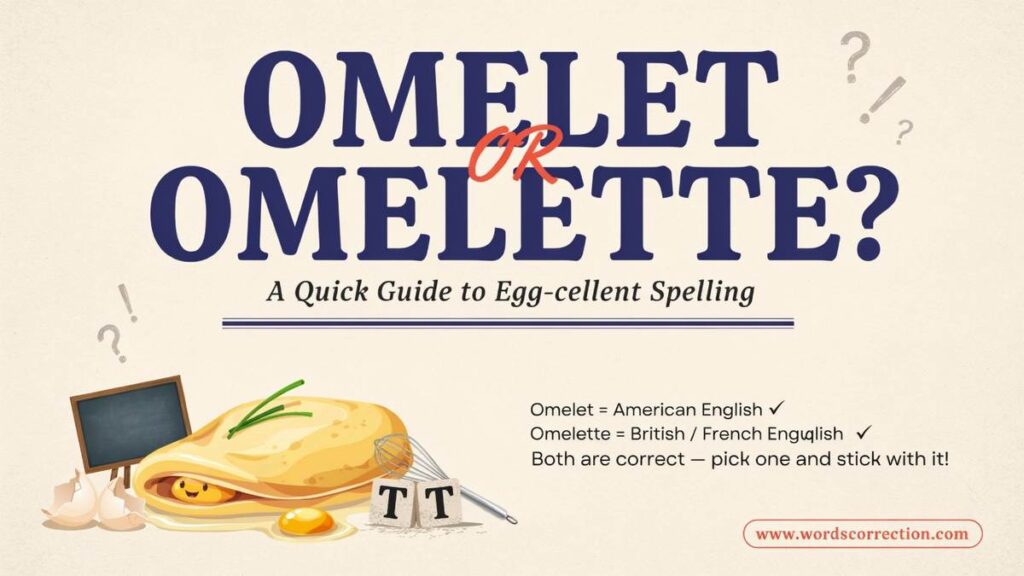
Is it omelet or omelette? These two spellings often create confusion, especially when writing about everyone’s favorite egg dish. Both forms are correct, but the right choice depends on the variety of English you’re using. American English generally favors the shorter spelling, “omelet,” while British English traditionally uses “omelette.” Although the difference may seem small, choosing the appropriate spelling helps keep your writing accurate, consistent and professional. In this guide, you’ll discover what each spelling means, how they differ, where they originated and which version to use in different writing contexts.
Omelet or Omelette Quick Answer
The short answer is that both spellings are correct, but their regional preferences differ.
- Omelet: The standard and more common spelling in American English.
- Omelette: The traditional and preferred spelling in British English. It is also the original French spelling.
- Meaning: Both words describe the same egg-based dish.
- Pronunciation: Both generally have the same pronunciation within a particular English accent.
- Plural: Omelets is the plural of omelet, while omelettes is the plural of omelette.
For example
- American English: I ordered a cheese omelet for breakfast.
- British English: I ordered a cheese omelette for breakfast.
Neither sentence contains a spelling mistake. The difference comes down to regional writing conventions.
Omelet vs Omelette Quick Examples
Here are some additional examples showing how both spellings work in everyday English
| American English: Omelet | British English: Omelette |
|---|---|
| She made a cheese omelet. | She made a cheese omelette. |
| I ordered a vegetable omelet. | I ordered a vegetable omelette. |
| He prefers mushroom omelets. | He prefers mushroom omelettes. |
| The chef prepared a fluffy omelet. | The chef prepared a fluffy omelette. |
Notice that the spelling changes, but the sentence structure and meaning remain the same.
Learn the difference between tricky English words with easy explanations
Passtime or Pastime Which Spelling Is Correct?
Omelet vs Omelette What Do the Words Mean?
Before examining their spelling differences, it’s worth understanding what these words actually describe.
An omelet or omelette is a dish made by beating eggs and cooking the mixture in a frying pan. The eggs usually set into a soft, flat shape that cooks can fold in half or serve open-faced. People often add ingredients such as cheese, mushrooms, onions, tomatoes, spinach, ham, or fresh herbs.
Both words function as countable nouns in English. You can talk about one omelet, two omelets, or several omelettes.
The word describes a familiar breakfast dish, although people also enjoy it for lunch or dinner. Its ingredients and preparation can vary depending on regional cooking traditions and personal preferences.
The spelling doesn’t tell you how the cook prepares the dish. An American restaurant might serve a traditional French-style omelet, while a British café might offer an American-style omelette.
Omelet Meaning and Definition
Omelet is a noun that refers to a cooked egg dish, usually made by beating eggs and frying them in a pan.
American English generally uses this spelling. You’ll commonly find it in American cookbooks, restaurant menus, food blogs, and everyday conversations.
Examples
- My father makes a delicious cheese omelet every Sunday.
- She added spinach and mushrooms to her omelet.
- The breakfast menu includes a three-egg omelet.
- Would you like an omelet with toast or hash browns?
The word can describe different varieties of the dish. A cheese omelet, for instance, contains cheese as a filling or ingredient. A vegetable omelet might include peppers, onions, mushrooms, and spinach.
The key point is simple omelet isn’t an informal abbreviation or a careless version of another word. It’s an accepted standard spelling in American English.
Omelette Meaning and Definition
Omelette is the alternative spelling of omelet. British English traditionally prefers this form, which also matches the standard spelling in French.
It refers to the same egg dish. The additional letters don’t introduce a different ingredient, cooking method, or culinary category.
Examples
- She prepared a mushroom omelette for breakfast.
- The restaurant serves a traditional French omelette.
- He ordered a cheese and tomato omelette.
- We enjoyed freshly cooked omelettes at the hotel.
The word also appears in familiar expressions and food-related writing. One well-known example is the saying:
You can’t make an omelette without breaking eggs.
This expression means that achieving something worthwhile may involve accepting some inconvenience, difficulty, or sacrifice along the way.
Both spellings appear in established English dictionaries. The main distinction is regional preference, not meaning.
Learn the difference between confusing more English words step by step
Ingage vs Engage Which Word Is Correct?
Omelet or Omelette American vs British English Spelling
The biggest difference between omelet and omelette comes from the way American and British English handle spelling variations.
English has developed different written conventions across countries. Words such as color and colour, favorite and favourite, and center and centre demonstrate how the same language can maintain different standard forms.
The omelet and omelette difference follows a similar pattern.
American English generally favors the shorter form, while British English retains the French-style ending.
| Feature | American English | British English |
|---|---|---|
| Preferred spelling | Omelet | Omelette |
| Meaning | Egg-based dish | Egg-based dish |
| Part of speech | Noun | Noun |
| Plural | Omelets | Omelettes |
| Word origin | French | French |
| Typical usage | US recipes and menus | UK recipes and menus |
Major dictionaries recognize both forms and identify their regional preferences. Oxford generally lists omelette as the main entry and recognizes omelet as a North American variant. Cambridge also identifies omelet with American English and omelette with British English.
Omelet in American English
If you’re writing for readers in the United States, omelet is generally the safest choice.
American English often simplifies certain spellings compared with traditional British forms. This pattern appears in several familiar words
| American English | British English |
|---|---|
| Omelet | Omelette |
| Color | Colour |
| Favorite | Favourite |
| Center | Centre |
| Theater | Theatre |
| Traveling | Travelling |
These examples don’t all follow the same historical spelling process. However, they illustrate the broader differences between American and British writing conventions.
In the United States, omelet appears in everyday food vocabulary. You’ll see it on diner menus, in breakfast recipes, and in cooking instructions.
Examples
- The hotel offers a made-to-order cheese omelet.
- I usually prepare a vegetable omelet before work.
- This recipe explains how to make a fluffy mushroom omelet.
- The restaurant serves its western omelet with toast and potatoes.
The American spelling is also recognized by major dictionaries. Merriam-Webster lists omelet as an established English noun.
For American-focused content, using omelette isn’t necessarily a spelling error. However, omelet better matches the usual American convention.
Omelette in British English
British English traditionally prefers omelette, with the final -tte.
This spelling follows the French form from which English borrowed the word. It remains standard in British dictionaries, cookbooks, restaurant menus, and general writing.
Examples
- The café serves a traditional cheese omelette.
- She ordered a mushroom omelette for lunch.
- The chef prepared a French-style omelette with fresh herbs.
- We had vegetable omelettes for breakfast.
British writers generally choose omelette because it matches their established spelling conventions.
However, the American spelling isn’t automatically wrong in British English. Readers can understand both forms, and dictionaries recognize the alternative. Still, if you’re following a British publication’s style guide, omelette is usually the more appropriate choice.
Omelet or Omelette in Canadian, Australian, and Other English Varieties
What happens when your readers aren’t American or British?
The answer requires a little more care because English spelling preferences don’t divide neatly into two groups.
Canadian English uses a mixture of British and American conventions. For example, Canadians commonly write colour and centre, even though American English uses color and center. Food-related vocabulary can also reflect influences from both countries. Both omelet and omelette are recognizable, so check the preferred spelling in the dictionary or style guide you’re following.
Australian English generally follows many British spelling conventions. As a result, omelette is a natural choice in Australian writing. However, the shorter form may still appear in international recipes and other publications.
Other Commonwealth countries also have their own writing practices. It’s best not to assume that every country follows exactly the same spelling rules.
For international content, consider these guidelines
- Identify the main country or audience you’re writing for.
- Follow the spelling conventions of your chosen English variety.
- Check a trusted regional dictionary when you’re unsure.
- Use the same spelling throughout the article.
- Avoid changing spelling simply because another version appears in a quotation or source title.
Remember: International English doesn’t require every country to use identical spellings. Consistency and audience expectations matter more than forcing one regional form everywhere.
Learn the difference between commonly confused more words in English
Implicit vs Complicit what’s the Differences?
Omelet or Omelette Origin and Etymology
The history of omelet and omelette is more interesting than their small spelling difference suggests.
The word entered English through French. Its history also reaches further back to older French forms and Latin vocabulary associated with something thin or blade-shaped.
The traditional French spelling is omelette. English adopted the word during the early modern period and eventually developed two established spellings.
Historical dictionary explanations connect the word to earlier French forms such as amelette and alumette, with a further connection to Latin lamella, meaning a small thin plate. This history provides insight into how the modern word developed.
The French Origin of Omelette
In French, the word is written omelette.
It is a feminine noun in French, and its plural form is omelettes. The Académie française traces its history to earlier French forms, including amelette and alumette.
The historical explanation connects these forms to alumelle, a diminutive associated with a blade or thin flat object. The word’s development ultimately relates to the Latin term lamella.
Why would an egg dish have a name connected to a blade?
The historical explanation relates to the flat shape of the preparation. A cooked omelette can form a thin, flattened layer, which helps explain the connection with a thin plate or blade.
The word’s history demonstrates how language can preserve traces of older meanings even when the modern object has a completely different everyday purpose.
How Omelet Became an American Spelling
When English borrowed omelette from French, the word appeared in forms that differed from today’s spelling.
Over time, English developed the shorter form omelet. American English eventually adopted this spelling as its standard preference.
This development fits a wider pattern of English language evolution. Borrowed words don’t always retain every letter or spelling feature from their original language.
However, it’s important not to oversimplify the history. The difference isn’t simply a modern American decision to remove two letters from French. Historical spellings changed over time, and English usage developed through several stages.
Today, both forms remain established. The shorter version is especially associated with American English, while the French-style spelling remains preferred in Britain.
Learn the difference between similar English words the easy way
Xenodochial vs Xenodochium Which Word Should You Use?
Omelet or Omelette Pronunciation
Does the extra ending change how you say the word?
Generally, no. Omelet and omelette have the same pronunciation within the same English accent.
The exact vowel sound varies between American and British English, but the written difference doesn’t create another syllable.
Common dictionary IPA transcriptions include
| English variety | IPA pronunciation |
|---|---|
| American English | /ˈɑː.mə.lət/ |
| British English | /ˈɒm.lət/ |
The first syllable receives the main stress in both varieties. Pronunciation can also vary slightly among speakers and regional accents.
How to Pronounce Omelet and Omelette
Both spellings generally sound alike.
When speaking, pay attention to the first vowel because American and British accents pronounce it differently.
- American English uses a vowel sound similar to the one in father.
- British English uses a different vowel, commonly represented by /ɒ/.
- The American pronunciation is commonly represented with three syllables.
- The British pronunciation is commonly represented with two syllables.
- Both forms end with the /t/ sound.
The additional letters in omelette don’t mean you should pronounce an extra syllable or emphasize the final E.
A common mistake: Trying to pronounce the French spelling as though every written letter needs a separate sound. English speakers generally pronounce omelette according to established English pronunciation rather than reading every letter individually.
Learn the difference between tricky words and use them correctly
Stigmatism vs Astigmatism Which Term Is Correct?
What Is the Plural of Omelet or Omelette?
The plural forms are straightforward. Both words follow the regular English pluralization rule for most nouns: add -s.
The spelling you choose determines which plural form you should use.
| Singular | Plural | Regional preference |
|---|---|---|
| Omelet | Omelets | American English |
| Omelette | Omelettes | British English |
Neither plural form is incorrect. They simply correspond to their respective singular spellings.
Examples of Omelets in Sentences
Here are some examples using the American plural:
- The restaurant serves several types of omelets.
- We ordered two cheese omelets for breakfast.
- These vegetable omelets contain spinach and mushrooms.
- The chef prepares fresh omelets throughout the morning.
Examples of Omelettes in Sentences
These examples use the British spelling:
- The café offers several traditional omelettes.
- We ordered two mushroom omelettes.
- Freshly prepared omelettes are available every morning.
- The restaurant specializes in French-style omelettes.
Writing tip: Don’t mix the singular and plural spelling conventions unnecessarily. If your article uses omelet, write omelets. If it uses omelette, write omelettes.
Learn the difference between everyday English mistakes
Realize vs Realise What Is the Difference?
Omelet or Omelette Side-by-Side Comparison
Sometimes the easiest way to understand two commonly confused words is to compare them directly.
The following table summarizes everything you need to know about the omelet and omelette difference.
| Category | Omelet | Omelette |
|---|---|---|
| Correct spelling | Yes | Yes |
| Main regional preference | American English | British English |
| French spelling | No | Yes |
| Meaning | Cooked egg dish | Cooked egg dish |
| Part of speech | Noun | Noun |
| Pronunciation | Same general pronunciation | Same general pronunciation |
| Singular form | Omelet | Omelette |
| Plural form | Omelets | Omelettes |
| Common context | American menus and recipes | British menus and recipes |
| Can they be used interchangeably? | Yes | Yes |
The comparison makes one thing clear: the words don’t have different meanings. Their main distinction comes from regional spelling conventions.
Learn the difference between commonly misused words
Coaches or Coach’s Which Spelling Is Correct?
Which Spelling Should You Use?
Now that you understand the definitions and history, choosing the right spelling becomes much easier.
The best option depends on your readers, publication requirements, and preferred English variety.
Use Omelet for American Readers
If you’re writing for an audience in the United States, choose omelet.
This spelling matches standard American English usage and looks natural in American food-related content.
Use it in
- American food blogs.
- Breakfast recipes.
- Restaurant menus.
- Newspapers and magazines.
- School assignments written in American English.
- Product descriptions aimed at American customers.
Example
The restaurant’s signature cheese omelet comes with fresh tomatoes and toasted bread.
This sentence follows the usual American spelling convention.
Use Omelette for British Readers
If your target audience lives in the United Kingdom, omelette is generally the better option.
It follows traditional British spelling and matches the form commonly used in British dictionaries and publications.
Use it in
- British food blogs.
- UK restaurant menus.
- British cookbooks.
- Educational materials.
- Newspaper articles.
- Recipes aimed at British readers.
Example
The restaurant’s signature cheese omelette comes with fresh tomatoes and toasted bread.
The meaning remains identical. Only the spelling changes.
Which Spelling Should You Use for International Content?
Writing for an international audience can make spelling decisions slightly more complicated.
A reader in Canada may be familiar with both forms. Someone in Australia may expect British-style spelling, while an American reader may naturally recognize omelet.
Rather than switching between spellings, establish one consistent writing convention.
If you choose American English
- Use omelet.
- Use omelets.
- Follow other American spelling conventions throughout the article.
If you choose British English
- Use omelette.
- Use omelettes.
- Follow British spelling conventions throughout the article.
For an international website, you can also create separate regional versions when your audience and content strategy justify them.
The goal isn’t to make every reader prefer your spelling. It’s to make your writing consistent and easy to understand.
Learn the difference between basic English word mistakes
Grimey or Grimy Which Spelling Is Correct?
Common Spelling Mistakes with Omelet and Omelette
Although both spellings are correct, writers sometimes make mistakes when choosing between them.
Most problems happen because people assume that one regional form must be wrong. Others come from mixing spelling conventions or misunderstanding the plural rules.
Here are the mistakes worth avoiding.
1 Mistake Assuming Omelette Is Incorrect
Some American writers see omelette and assume that the additional letters make it a misspelling.
That’s incorrect.
Omelette is the traditional French spelling and the preferred form in British English. It also appears as an accepted alternative in American dictionaries.
Incorrect assumption: Omelette is always a spelling mistake.
Correct understanding: Omelette is correct, particularly in British English.
2 Mistake Assuming Omelet Is a Misspelling
The opposite confusion happens when writers believe that every English word borrowed from French must preserve its original spelling.
However, English frequently adapts borrowed words.
Omelet is a standard American English spelling. It isn’t an accidental shortening or a grammatical error.
Incorrect assumption: Omelet is an incomplete version of omelette.
Correct understanding: Omelet is an established spelling with its own regional preference.
3 Mistake Mixing American and British Spellings
Imagine reading an article that uses color, favorite, center, and omelette without any clear reason for the mixture.
Each individual word may be correct, but the inconsistent spelling style can make the writing look poorly edited.
Inconsistent:
The chef prepared a vegetable omelette and served it with colorful roasted potatoes. His favorite breakfast includes an omelet.
More consistent in American English:
The chef prepared a vegetable omelet and served it with colorful roasted potatoes. His favorite breakfast includes an omelet.
More consistent in British English:
The chef prepared a vegetable omelette and served it with colourful roasted potatoes. His favourite breakfast includes an omelette.
A publication may have specific exceptions, but consistency should remain the general rule.
4 Mistake Using the Wrong Plural Form
Another common error involves adding the wrong ending.
The standard plural forms are:
- One omelet, two omelets.
- One omelette, two omelettes.
Avoid creating unnecessary variations such as omelet’s when you simply want to describe more than one omelet.
The apostrophe indicates possession or certain contractions. It doesn’t normally form a regular plural.
Learn the difference between often confused words
Visualization or Visualisation Which Spelling Is Correct?
Omelet or Omelette in Everyday Writing
These two spellings appear in many everyday situations. Understanding the context can help you select the appropriate version without overthinking it.
Omelet or Omelette in Recipes and Cooking Blogs
Recipes often reflect the English variety used by their writers or publishers.
An American recipe might have the title
Easy Cheese Omelet Recipe
A British recipe might use
Easy Cheese Omelette Recipe
Both titles describe the same basic dish.
If you’re writing a recipe, choose the spelling that matches your intended audience. You should also maintain the same form in the title, ingredients, preparation instructions, and conclusion.
Omelet or Omelette on Restaurant Menus
Restaurant menus provide another clear example of regional spelling.
An American breakfast restaurant might list
- Western omelet
- Cheese omelet
- Mushroom omelet
- Vegetable omelet
A British café might list
- Cheese omelette
- Mushroom omelette
- Spanish omelette
- French-style omelette
These examples demonstrate how regional language conventions influence everyday food vocabulary.
Restaurants may also retain traditional foreign-language spellings to reflect a particular cuisine. A menu can therefore use a spelling that differs from the surrounding text without necessarily making a mistake.
Omelet or Omelette in Formal and Academic Writing
Formal writing requires consistency and attention to the relevant style guide.
If you’re preparing an academic paper, choose the spelling convention required by your institution or publication.
For example
- A paper written in American English should generally use omelet.
- A paper following British English conventions should generally use omelette.
- A paper discussing French cuisine may preserve the original French spelling when appropriate.
The important thing is to distinguish between a regional spelling preference and an actual spelling error.
Learn the difference between confusing word pairs
Follow Up vs Follow-Up Which Is Correct?
Omelet or Omelette Real-World Usage Examples
Consider two writers preparing articles about breakfast foods.
Case Study: An American Food Blogger
Sarah runs a food blog for readers in the United States. She publishes recipes for cheese omelets, vegetable omelets, and mushroom omelets.
Her audience expects American English. Therefore, she consistently uses omelet in her titles, ingredient descriptions, and instructions.
Case Study: A British Cooking Website
James manages a British cooking website. His articles cover traditional breakfasts, French cuisine, and simple egg recipes.
He uses omelette throughout his content because it follows the preferred British spelling convention.
Neither writer needs to correct the other. They simply follow the spelling style that suits their audience.
This example illustrates an important writing principle: correct usage depends on context, not just on the number of letters in a word.
Practice Session Omelet or Omelette
Instructions: Fill in each blank with the most appropriate word to complete the sentence. Read each sentence carefully and apply your understanding of the spelling differences between omelet and omelette.
- Both omelet and omelette are considered ______ spellings.
- The spelling omelet is commonly preferred in ______ English.
- The spelling omelette comes from the ______ language.
- In British English, the word is commonly spelled ______.
- An omelet is a dish primarily prepared with beaten ______.
- The word omelette originated in the ______ language.
- Both spellings refer to the ______ dish.
- American writers generally prefer the spelling ______.
- The difference between omelet and omelette is related to ______.
- In American professional writing, ______ is the preferred spelling.
- The traditional French spelling of the word is ______.
- Omelet and omelette are examples of regional spelling ______.
- Writers addressing a British audience may prefer the spelling ______.
- The main ingredient in a traditional omelet is ______.
- The spelling omelet is widely used in the United ______.
- The spelling omelette is commonly recognized in British ______.
- An omelet is a popular ______ dish.
- The plural form of omelet is ______.
- The plural form of omelette is ______.
- Your spelling choice should depend on your target ______.
- An omelet can include cheese, vegetables, and other ______.
- Omelet and omelette have the same basic ______.
- Maintaining consistent spelling is important in professional ______.
- Omelette is associated with traditional ______ cuisine.
- For an article written in American English, the recommended spelling is ______.
Answers
- Correct
- American
- French
- Omelette
- Eggs
- French
- Same
- Omelet
- Spelling
- Omelet
- Omelette
- Variations
- Omelette
- Eggs
- States
- English
- Egg
- Omelets
- Omelettes
- Audience
- Ingredients
- Meaning
- Writing
- French
- Omelet
Here’s a trusted source for clear word meanings:
Cambridge Dictionary
FAQ’s
Which spelling is correct omelet or omelette?
Both omelet and omelette are correct spellings of the same egg dish. Omelet is the preferred spelling in American English, while omelette is commonly used in British English and other English-speaking countries.
How do Americans spell omelet?
Americans typically spell the word as omelet, with one T at the end. This is the standard spelling used in American dictionaries, cookbooks, restaurant menus, and everyday writing.
Is omelette the original French spelling?
Yes. Omelette is the original French spelling. The word entered English from French, and American English later adopted the shorter form, omelet.
What does omelette mean in English?
An omelette is a dish prepared by cooking beaten eggs in a frying pan until they become firm. It is often folded or filled with ingredients such as cheese, vegetables, mushrooms, and herbs.
How are omelet and omelette pronounced?
Both spellings generally have the same pronunciation in English. The additional letters in omelette do not create a different pronunciation, although minor variations may occur between regional accents.
Is omelette the British or American spelling?
Omelette is the preferred spelling in British English, whereas omelet is the standard American English form. Both versions are correct and widely understood.
How do you spell omelette in French?
The correct French spelling is omelette. It contains two T’s and ends with the letter E. This spelling is also retained in British English and several other English-speaking regions.
What is the plural form of omelet?
The plural form of omelet is omelets. Simply add an S to the singular noun when referring to two or more omelets.
What is the plural form of omelette?
The plural of omelette is omelettes. The spelling remains unchanged except for the addition of an S at the end.
Do omelet and omelette refer to the same dish?
Yes. Both terms describe the same egg-based dish made from beaten eggs cooked in a pan. The difference is purely regional spelling, not a difference in ingredients or preparation.
Is omelette an acceptable spelling in American English?
Yes. Although omelet is the preferred American spelling, omelette is also recognized and understood in the United States. It may appear in restaurant menus, culinary publications, and discussions of French cuisine.
Which spelling should you use in professional writing?
Choose omelet when writing for an American audience and omelette when following British English conventions. Maintaining consistent spelling throughout your content helps establish clarity and professionalism.
Why are there two different spellings of omelet?
The two spellings developed through regional differences in English. American English adopted a simplified form, omelet, while British English retained the traditional French-influenced spelling, omelette.
Is omelet originally an English or French word?
The word omelet originated from the French word omelette. English borrowed the term and gradually developed an alternative spelling that became standard in American English.
Which spelling is commonly used in Canadian English omelet or omelette?
Omelette is commonly used in Canadian English, reflecting British spelling influences. However, omelet is also understood and may appear in Canadian publications and menus.
How is omelette spelled in Australian English?
Omelette is the commonly preferred spelling in Australian English. Australia generally follows British spelling conventions, although the American spelling omelet is also recognized.
What is the difference between a French omelette and a regular omelet?
A traditional French omelette is gently cooked to create a soft, tender interior and a smooth, pale exterior. Other omelet styles may be cooked until golden brown and often include more generous fillings.
Can omelet and omelette be used interchangeably?
Yes. Both words have the same meaning and can be used interchangeably without changing the intended message. However, choosing the spelling that matches your audience’s regional English makes your writing more consistent.
What is the origin and history of the word omelette?
The word omelette comes from French and has roots in older French terminology associated with cooked egg dishes. It eventually became part of the English language, developing the alternative American spelling omelet.
Is omelet a countable or uncountable noun?
Omelet is a countable noun because it refers to an individual dish that can be counted. For example, you can say one omelet, two omelets, or several omelets.
What ingredients are commonly used to prepare an omelette?
A basic omelette is made with eggs, butter or cooking oil, salt, and pepper. Common additional ingredients include cheese, onions, tomatoes, mushrooms, spinach, bell peppers, and fresh herbs.
Is an omelette traditionally served for breakfast?
Yes. An omelette is a popular breakfast and brunch dish in many countries. It can also be served for lunch or dinner with bread, salad, potatoes, or other side dishes.
What is the difference between an omelette and scrambled eggs?
An omelette is cooked as a single layer of beaten eggs and is often folded around a filling. Scrambled eggs are stirred continuously or repeatedly during cooking, creating soft, separate egg curds.
Which spelling should American food bloggers use: omelet or omelette?
American food bloggers should generally use omelet because it follows standard American English spelling conventions. However, mentioning omelette as an alternative spelling can help readers understand regional differences and discover related information.
Does the spelling difference between omelet and omelette affect their meaning?
No. The spelling difference does not affect the meaning, pronunciation, or basic preparation of the dish. Both words refer to the same egg-based meal, with the preferred spelling depending on regional English conventions.
Learn the difference between commonly confused more words in English
Dieing or Dying Which Spelling Is Correct?
Conclusion
So, is it omelet or omelette? Both spellings are correct, and the difference lies in regional English conventions rather than meaning or grammar. American English generally favors omelet, while British English traditionally uses omelette. Both refer to the same popular egg dish, so neither spelling is more correct than the other. The best choice depends on your target audience and the style of English you’re following. By understanding this distinction, you can avoid a common spelling mistake and keep your writing accurate and consistent. After all, a good omelet deserves the right spelling, whichever version you choose.

Stella AJS is an experienced blogger and dedicated English language writer at Words Correction. She turns confusing grammar, word meanings, spelling, and usage into clear, practical insights that readers can easily understand and apply. With a passion for precise and engaging writing, Stella helps readers avoid common language mistakes, strengthen their vocabulary, and communicate with greater clarity and confidence.




