

The words “slushy” and “slushie” look and sound almost the same, so it’s easy to mix them up. This common spelling confusion can lead to mistakes, especially when you’re writing about a frozen drink. The key to understanding slushy vs slushie is knowing that the two words usually have different roles. Slushy mainly describes something wet, icy, or partly melted, while slushie usually refers to a cold, semi frozen drink. Learning this simple difference can help you write more clearly and use each word correctly. This guide explains their meanings, spelling, grammar, pronunciation, and everyday usage with clear examples.
Slushy vs Slushie Quick Answer
Here is the basic difference at a glance:
| Word | Part of Speech | Main Meaning | Example |
| Slushy | Adjective | Partly melted, wet, icy, or having a slush-like texture | “The snow became slushy.” |
| Slushie | Noun | A sweet, frozen or semi-frozen drink | “I bought a cherry slushie.” |
| Slush | Noun | Partly melted snow, ice, or a frozen drink mixture | “The sidewalk was covered in slush.” |
The slushy spelling and slushie spelling are therefore not simply two interchangeable spellings of the same word.
They are related words with different common grammatical functions.
For example:
- The snow is slushy.
- I want a slushie.
- The road became slushy after the snow melted.
- She ordered a blue raspberry slushie.
- The slushie had a thick, slushy texture.
In the first and third examples, slushy describes a condition. In the other examples, slushie names a beverage.
Is Slushy a Word?
Yes. Slushy is a standard English adjective. It commonly describes snow or another substance that has partly melted and become wet or soft.
The word can also describe something that has a similar consistency, including certain drinks.
In informal English, slushy can have a figurative meaning as well. It may describe writing, movies, stories, or emotions that seem excessively sentimental or romantic.
Is Slushie a Word?
Yes. Slushie is an established English noun for a thick, sweet, semi-frozen drink.
It is commonly used in everyday speech, menus, advertising, and casual writing.
The word can describe a single beverage:
I bought a slushie.
It can also appear in the plural:
We bought three slushies.
What Does Slushy Mean?
The slushy meaning is closely connected to the noun slush.
Slush refers to wet, partly melted snow or ice. Slushy describes something that has that same soft, wet, partially melted quality.
For example:
The fresh snow looked beautiful in the morning, but it became slushy by afternoon.
The word commonly appears in expressions such as:
- slushy snow
- slushy roads
- slushy sidewalks
- slushy ground
- slushy ice
- slushy conditions
- slushy texture
When snow begins to melt, it loses its powdery structure. Water forms around the remaining ice crystals, creating a wet mixture. That is exactly the kind of condition the adjective slushy describes.
Learn the difference between more words people mix up
Tier or Teir Which One Is Right?
Slushy Road Meaning
The phrase slushy road meaning is straightforward. A slushy road has wet, partly melted snow or ice covering its surface.
For example:
The roads became slushy after several hours of snowfall followed by warmer temperatures.
Slushy roads can also affect traction. Drivers may encounter reduced grip, uneven surfaces, standing water, or slippery patches as snow melts.
That is why weather reports may mention slushy or slippery road conditions after a snowstorm.
Slushy as a Description for Drinks
Slushy can also describe the consistency of a beverage.
For example:
The drink had a thick, slushy texture.
Here, slushy does not name the drink. It describes what the drink feels like.
This distinction is important because a beverage can be slushy without the word slushy functioning as its formal noun.
What Does Slushie Mean?
The slushie meaning is more specific than slushy.
A slushie is generally a sweet, frozen or semi-frozen beverage containing small ice crystals mixed with flavored liquid.
It can be considered a type of:
- semi-frozen drink
- frozen drink
- flavored ice drink
- icy beverage
- frozen beverage
- slush drink
- slush beverage
- crushed ice drink
The exact ingredients vary depending on the product or recipe. Commercial drinks may use flavored syrup, sugar, water, fruit flavoring, and other ingredients.
A homemade version may rely on fruit juice, water, sugar, and ice.
The defining feature is the texture. A slushie contains enough frozen material to create a thick, icy consistency while remaining fluid enough to drink.
Learn the difference between everyday English mistakes
Personel or Personnel Which is Correct?
Slushy vs Slushie The Main Difference
The most important difference between slushy and slushie is their usual grammatical role.
Slushy is primarily an adjective.
Slushie is primarily a noun.
Think of it this way:
Slushy tells you what something is like. Slushie tells you what the frozen drink is called.
Consider these two sentences:
The snow is slushy.
Here, slushy describes the snow.
I bought a slushie.
Here, slushie identifies the beverage.
The difference becomes even clearer when both words appear together:
The slushie had a thick, slushy texture.
In that sentence, slushie is the noun and slushy is the adjective.
Slushy vs Slushie Comparison
| Feature | Slushy | Slushie |
| Main grammatical role | Adjective | Noun |
| Describes texture | Yes | Not usually |
| Describes snow | Yes | No |
| Describes roads | Yes | No |
| Names a frozen drink | Not usually | Yes |
| Related word | Slush | Slush |
| Singular form | Slushy | Slushie |
| Plural form | Usually not applicable | Slushies |
| Example | “The snow is slushy.” | “She ordered a slushie.” |
Is Slushy a Correct Spelling?
Yes. Slushy is a correct spelling.
The word comes from slush with the adjective-forming suffix -y.
This is a familiar pattern in English:
- mud → muddy
- rain → rainy
- salt → salty
- cloud → cloudy
- slush → slushy
The suffix changes the noun into an adjective that describes a quality or condition.
So the slushy spelling is not a variation of slushie. It has its own grammatical function.
Examples of Slushy
The sidewalk was slushy after the snow began to melt.
The storm left several roads wet and slushy.
The snow became slushy in the afternoon sun.
The ice had a soft, slushy consistency.
The frozen drink became more slushy as it warmed.
The adjective can also appear in comparative forms:
- slushy
- slushier
- slushiest
For example:
The snow was slushier near the curb.
This section of the road is the slushiest after the storm.
Is Slushie a Correct Spelling?
Yes. Slushie is a correct and established spelling for the frozen beverage.
If you are asking how to spell slushie, the standard spelling is:
S-L-U-S-H-I-E
The final -ie is part of the established noun spelling.
It is important not to confuse the spelling with the adjective slushy.
Compare:
I bought a slushie.
with:
The drink was slushy.
The first sentence names the drink. The second describes its texture.
Learn the difference between commonly misused words
Pair or Pare what’s the difference?
Slushy vs Slushie Word Formation and Origin
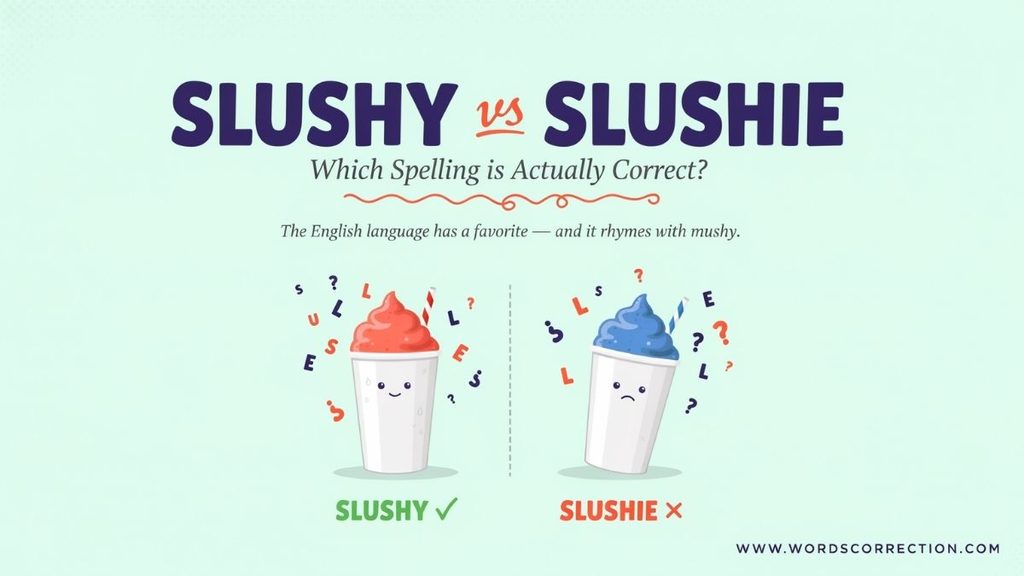
The history of these words becomes easier to understand when you start with slush.
The Origin of Slush
Slush refers to wet, partly melted snow or ice. The word also developed a beverage-related meaning for a thick frozen drink.
This gives English the basic noun:
slush
From that word, speakers developed related forms that describe the material or name products made from it.
How Slushy Formed
Slushy developed from slush plus the suffix -y.
The structure is simple:
slush + y = slushy
The resulting adjective describes something that resembles slush or has the characteristics of slush.
For example:
The snow is slushy.
The sentence doesn’t name a type of snow. It describes the snow’s condition.
How Slushie Developed
Slushie developed as a noun for a frozen or semi-frozen drink.
Unlike slushy, which functions mainly as an adjective, slushie identifies the beverage itself.
This explains why the two words look so similar while performing different jobs.
English contains many related word forms that follow this kind of pattern. One word can name a substance while another describes its characteristics.
Learn the difference between basic English word mistakes
Maximise or Maximize which one is correct?
Slushy vs Slushie in American English
In American English, slushy is commonly used when discussing wet snow, melting ice, and road conditions.
Common expressions include
- slushy roads
- slushy sidewalks
- slushy snow
- slushy conditions
- slushy ground
Slushie is commonly used as the noun for a frozen drink.
For example
The store sells several flavors of slushies.
I ordered a strawberry slushie.
American English also contains several well-known branded frozen beverages. One example is Slurpee, the proprietary frozen beverage brand associated with 7-Eleven.
That distinction matters because brand names and generic nouns are not always the same thing.
A Slurpee is a particular branded product. A slushie is a general term for a type of frozen drink.
Learn the difference between often confused words
Invision or Envision Which Is Correct?
Slushy vs Slushie in British English and Other English Varieties
English vocabulary can change slightly from one region to another. Words used in everyday conversation may also differ depending on local brands, food culture, and common habits.
However, the fundamental distinction remains useful.
Slushy generally describes something that is partly melted, wet, or slush-like.
Slushie can function as the noun for a frozen drink.
Rather than treating one spelling as universally correct and the other as wrong, consider the meaning and grammatical role.
That approach works even when you encounter regional variations or different commercial names.
Grammar and Parts of Speech

It offers one of the easiest ways to understand the slushie vs slushy difference.
Slushy as an Adjective
An adjective modifies or describes a noun.
The slushy snow covered the sidewalk.
In this sentence, slushy describes snow.
You can also place it after a linking verb:
The snow was slushy.
Other examples include:
The road became slushy after the temperature rose.
The ice feels slushy.
The drink has a slushy texture.
If you are asking, “Is slushy a noun or adjective?” the practical answer is that slushy is primarily an adjective in ordinary modern usage.
Slushie as a Noun
A noun names a person, place, thing, or concept.
Slushie functions primarily as a countable noun for the frozen drink.
For example:
I bought a slushie.
She ordered two slushies.
The children wanted strawberry slushies.
This makes the answer to “Is slushie a noun?” clear: yes.
Can Slushie Be an Adjective?
In casual language, people may place nouns before other nouns to modify them.
For example:
slushie machine
Here, slushie appears before machine and helps identify the type of machine.
However, its basic lexical identity remains a noun.
In careful writing, it is more useful to recognize slushie as the beverage noun rather than treating it as a direct synonym for the adjective slushy.
Learn the difference between confusing word pairs
Families or Familys which one is correct?
Slushy vs Slushie Examples in Sentences
Examples make the distinction much easier to remember.
How to Use Slushy in a Sentence
The snow became slushy by noon.
Drivers faced slushy roads after the storm.
The sidewalk was wet and slushy.
The ice developed a slushy texture.
The drink became slushy after we blended it with ice.
The trail was muddy and slushy after the rain.
How to Use Slushie in a Sentence
I bought a cherry slushie.
She ordered a blue raspberry slushie.
The store sells several slushie flavors.
We made a homemade slushie with fruit and crushed ice.
Two slushies were sitting on the counter.
Using Both Words in One Sentence
The clearest examples use both terms:
The slushie had a thick, slushy texture.
I left my slushie in the sun, and it became less slushy.
The frozen drink looked like a slushie, while the melting snow outside was slushy.
These examples show that the two words complement each other rather than compete with each other.
Learn the difference between tricky grammar more words
Allie or Ally Difference And Usage
Slushy vs Slushie and Frozen Drinks
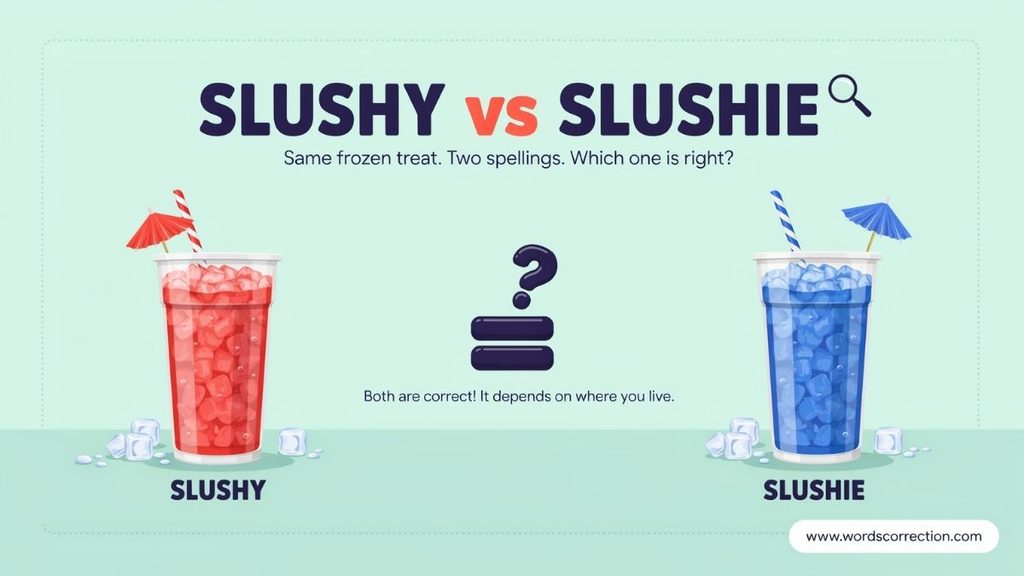
Frozen beverages have several names, and their terminology often overlaps.
You may encounter:
- slush
- slush drink
- slushie
- slushy drink
- frozen drink
- frozen beverage
- flavored ice drink
- crushed ice drink
- flavored slush
- frozen treat
These expressions can describe similar products, but they aren’t always exact synonyms.
A slush can refer to the general mixture or beverage category. Slushie commonly identifies the drink itself. Slushy describes its consistency.
What Is a Slushy Drink?
A slushy drink is a beverage with a thick, icy, semi-frozen consistency.
Depending on the recipe, it may contain:
- water
- sugar
- flavored syrup
- fruit juice
- fruit flavoring
- ice
Commercial products may use more specialized ingredients and equipment.
The goal is to maintain small ice crystals throughout the mixture instead of allowing the beverage to freeze into one solid block.
That creates the characteristic slushy texture.
Learn the difference between commonly mixed-up more words
Happend or Happened Which Spelling Is Correct?
Slushie Machine vs Slushy Machine
Both slushie machine and slushy machine appear in everyday searches.
A slushie machine is designed to prepare and maintain frozen beverages at a consistency that remains cold and partially frozen while still being easy to dispense.
The machine continually manages the mixture so that it doesn’t simply become a solid mass of ice.
The term slushy machine is also understandable because slushy describes the texture of the product.
For consumers, the two phrases may therefore refer to essentially the same type of equipment.
The distinction is mainly grammatical:
- slushie machine emphasizes the beverage being produced.
- slushy machine emphasizes the texture or type of frozen mixture.
Manufacturers and retailers may choose either wording for marketing purposes.
Homemade Slushie Recipe Understanding the Texture
A homemade slushie recipe provides a practical example of how these words work.
A simple homemade version can contain:
- fruit juice or another flavored liquid
- sugar, if needed
- ice
- fruit or flavoring
The ingredients are blended or partially frozen until the mixture develops a thick consistency.
The finished beverage is the slushie.
Its consistency is slushy.
That gives you a useful sentence to remember:
The slushie has a slushy texture.
The same principle applies to different slush drink flavors, including cherry, strawberry, lemon, watermelon, blue raspberry, and other fruit-based options.
The exact recipe can vary considerably. Some versions rely on crushed ice, while others freeze a portion of the liquid and blend it to create fine ice crystals.
Learn the difference between confusing more English words
Steel or Steal which one is correct?
Slushie vs ICEE vs Slurpee
Frozen drinks can look remarkably similar, but their names don’t necessarily mean the same thing.
Slushie
Slushie is a generic term for a frozen or semi-frozen drink.
It describes a beverage category rather than one particular company.
ICEE
ICEE is a brand name associated with frozen carbonated beverages.
It can refer to specific branded products rather than the entire category of frozen drinks.
Slurpee
Slurpee is a proprietary 7-Eleven brand name for its frozen beverage.
Therefore, when considering slushie vs ICEE or slushie vs Slurpee, the main issue is the difference between a generic term and a brand name.
| Term | Type |
| Slushie | Generic frozen-drink term |
| ICEE | Brand name |
| Slurpee | 7-Eleven brand name |
| Slush | General term for slushy material or frozen drink mixture |
A useful rule is simple: use the official spelling when referring to a specific brand. Use the generic term when discussing the broader category.
Learn the difference between tricky English words with easy explanations
Principal or Principle Don’t Mix Them Up
Common Mistakes With Slushy and Slushie
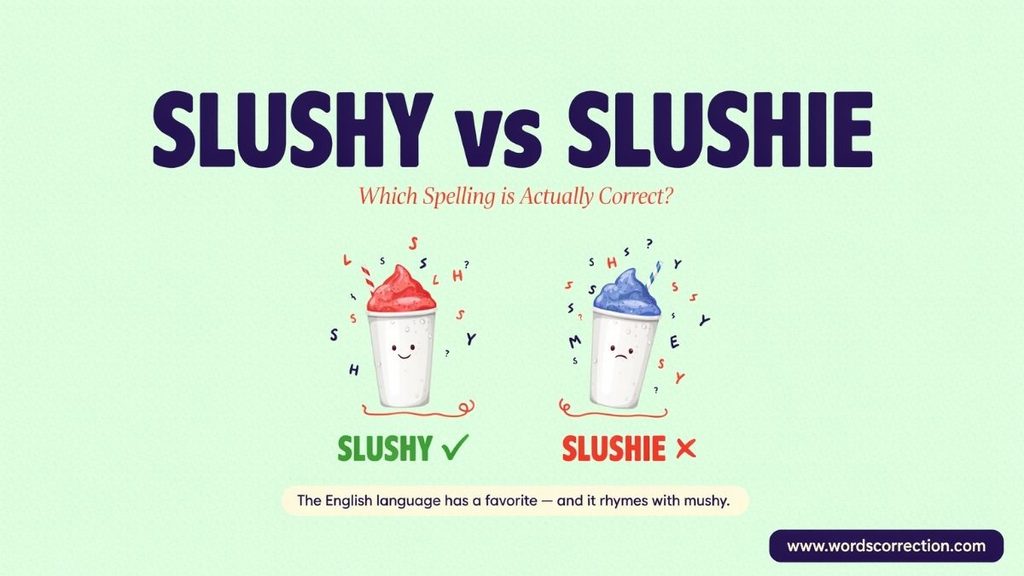
Treating Slushy and Slushie as Exact Synonyms
The biggest mistake is assuming that the words are merely alternative spellings.
They are related, but their usual grammatical roles differ.
Using Slushie to Describe Snow
When snow has partly melted, use slushy.
Correct:
The snow is slushy.
Less appropriate:
The snow is slushie.
The adjective slushy describes the condition of the snow.
Using Slushy as the Main Drink Noun
When ordering or naming the beverage, slushie is usually clearer.
Can I have a strawberry slushie?
You can use slushy to describe the drink’s consistency:
I like a thick, slushy drink.
However, those two uses aren’t grammatically identical.
Using the Wrong Plural
The plural of slushie is slushies.
Correct:
We bought four slushies.
Incorrect:
We bought four slushys.
The spelling changes from -ie to -ies in the plural.
Confusing Brand Names With Generic Terms
A branded frozen drink may have a specific spelling that applies only to that product.
For example, Slurpee is a brand name. It should not automatically replace the generic word slushie.
This distinction becomes particularly important in business writing, journalism, product descriptions, and advertising.
Slushie Plural, Possessive, and Related Forms
Understanding the related forms makes the spelling easier to use correctly.
| Form | Example |
| Singular | I bought a slushie. |
| Plural | We bought three slushies. |
| Singular possessive | The slushie’s flavor was cherry. |
| Plural possessive | The slushies’ lids were blue. |
The plural slushies is the standard form.
The possessive forms follow normal English rules.
For one slushie:
The slushie’s flavor was delicious.
For several slushies:
The slushies’ flavors were different.
Learn the difference between confusing more English words step by step
Programme or Program Spelling Guide
Slushy vs Slushie in Everyday Writing
In Casual Conversation
Both words sound natural when used correctly.
The roads are really slushy today.
Let’s get a slushie.
The context makes the difference clear.
In Text Messages and Social Media
Informal writing often contains creative spellings, abbreviations, and brand-inspired terminology.
Even so, standard spelling remains useful when you want your writing to look polished.
Use slushie when you mean the beverage and slushy when you’re describing its texture or another partly melted condition.
In School and Professional Writing
Precision matters more in formal writing.
If you’re discussing weather, write:
Heavy snowfall left the roads slushy.
If you’re discussing beverages, write:
The restaurant offers several slushie flavors.
The result is clearer and more professional.
In Menus and Marketing
Businesses can choose different names for products.
A menu might use:
- Fruit Slush
- Strawberry Slushie
- Frozen Fruit Drink
- Icy Fruit Beverage
- Frozen Berry Drink
These choices are often marketing decisions.
A product name doesn’t necessarily establish a universal grammar rule for the English language.
Slushy vs Slushie Pronunciation
One reason people confuse these words is that their pronunciation is nearly identical.
Both words are generally pronounced with the same basic sound pattern.
That means the difference is much easier to see in writing than to hear in conversation.
This is another reason context matters.
If someone says:
I want a slushy.
You may need to know whether they mean a frozen drink or are using an informal noun form. In standard usage, slushie is the clearer noun for the beverage.
If someone says:
The snow is slushy.
There is no such ambiguity. Slushy is functioning as an adjective.
Is Slushy or Slushie Correct?
If you’re asking “slushy or slushie which is correct?”, both words can be correct. The correct choice depends on the meaning.
Use slushy when you are describing something that is partly melted, wet, icy, or similar to slush.
Use slushie when you are referring to a frozen or semi-frozen drink.
For example:
The snow is slushy.
I ordered a slushie.
Both sentences are correct because each word performs the appropriate grammatical job.
Slushy vs Slushie Final Comparison
| Category | Slushy | Slushie |
| Word type | Adjective | Noun |
| Core meaning | Partly melted, wet, icy, or slush-like | Frozen or semi-frozen drink |
| Common subject | Snow, roads, ice, texture | Beverage |
| Example | “The sidewalk is slushy.” | “I ordered a slushie.” |
| Plural | Usually not pluralized as an adjective | Slushies |
| Related word | Slush | Slush |
| Beverage connection | Describes consistency | Names the beverage |
| Common mistake | Treating it as the standard drink noun | Using it as an adjective for snow |
Practice Sessions
Fill in each blank
- I bought a strawberry ________ from the convenience store.
- The roads became ________ after the snow started melting.
- She ordered two mango ________ for her children.
- The sidewalk was wet and ________ after the heavy snowfall.
- The frozen drink had a thick, ________ texture.
- He added flavored syrup to the ________ before serving it.
- A ________ is usually a flavored semi-frozen beverage.
- The melting snow turned into thick ________.
- Which spelling is correct for the frozen drink: ________ or slushy?
- We stopped for a cold ________ on the way home.
- The restaurant offers several fruit ________ in the summer.
- Driving became difficult because of the ________ roads.
- The ice began to melt, creating a layer of ________ on the ground.
- I prefer a cherry ________ on a hot afternoon.
- The drink should have a smooth but slightly ________ consistency.
- The children enjoyed their colorful ________ after school.
- The word ________ commonly functions as an adjective when describing texture or conditions.
- The word ________ commonly functions as a noun when naming a frozen drink.
- After the temperature increased, the snowy path became ________.
- The café sells a refreshing lemon ________ made with ice and syrup.
- The machine produces frozen ________ throughout the day.
- The fresh snow turned into wet ________ as the temperature rose.
- “I bought a blue raspberry ________” uses the word as a noun.
- “The snow was ________ and difficult to walk through” uses the correct adjective.
- Remember the basic rule: a ________ is the frozen drink, while ________ describes its texture.
Answer Session
- slushie
- slushy
- slushies
- slushy
- slushy
- slushie
- slushie
- slush
- slushie
- slushie
- slushies
- slushy
- slush
- slushie
- slushy
- slushies
- slushy
- slushie
- slushy
- slushie
- slushies
- slush
- slushie
- slushy
- slushie; slushy
Here’s a trusted source for clear more words Comparison:
Grammar Update
FAQs
What is the plural of slushy?
“Slushies” is the usual plural form when slushy refers to a frozen drink. For example, “The store sells fruit slushies in several flavors.” When slushy works as an adjective, it does not normally take a plural form.
Can slushy be used as a noun?
Yes, but its noun use is less common than slushie when referring to a frozen drink. In standard usage, slushie is generally the clearer choice for the beverage, while slushy commonly describes something with a wet, icy, or semi-frozen texture.
Can slushie refer to something other than a drink?
Usually, no. Slushie normally refers to a flavored frozen or semi-frozen beverage. When describing wet snow, melting ice, or muddy conditions, slushy is the more appropriate word.
What does slushy mean when describing roads?
Slushy describes roads covered with wet, partly melted snow or ice. For example, “The roads became slushy after the temperature rose.” Slushy road conditions can also make driving more difficult because they may reduce traction.
Why does slushie end with -ie?
Slushie developed as a noun form associated with a frozen drink. The spelling helps distinguish the name of the beverage from slushy, which is commonly used as an adjective to describe texture or conditions.
Can slushy describe the texture of a drink?
Yes. Slushy can describe a drink that contains small ice crystals and has a thick, semi-frozen consistency. For example, “The drink had a smooth but slightly slushy texture.”
Can slushie be used as an adjective?
Not usually. Slushie primarily functions as a noun and names the frozen beverage itself. Slushy commonly functions as an adjective, so it is more natural when describing the drink’s texture.
Is slush drink the same as slushie?
Generally, yes. Slush drink and slushie can both refer to a flavored semi-frozen beverage. However, terminology varies by region, business, and brand.
Why do some people spell the drink slushy?
The two words sound very similar, so speakers sometimes use slushy as an informal noun for the beverage. However, slushie is generally the clearer spelling when you are naming the frozen drink.
Is slushies or slushys correct?
Slushies is the standard plural spelling of slushie. Slushys is generally considered incorrect. Because slushie ends in -ie, the plural changes to -ies.
What is the difference between slush and slushie?
Slush refers to a soft, partly melted mixture of ice, snow, or another frozen substance. Slushie usually refers specifically to a frozen or semi-frozen drink made with a slush-like mixture.
Is slushy always related to ice?
No. Slushy can describe wet snow, melting ice, muddy mixtures, or anything with a loose, wet, semi-frozen consistency. The exact meaning depends on the context.
How do you use slushie in a sentence?
Use slushie as a noun when referring to a frozen beverage. For example: “I bought a strawberry slushie after lunch.”
How do you use slushy in a sentence?
Use slushy mainly as an adjective to describe texture or conditions. For example: “The melting snow made the sidewalk slushy.”
Can slushie and slushy appear in the same sentence?
Yes. They can appear together because they serve different grammatical purposes. For example: “The slushie had a thick, slushy texture.”
Do slushie and slushy have different pronunciations?
They are pronounced very similarly in everyday American English. In many accents, the difference is easier to notice in writing than in speech. Their main distinction is their typical grammatical function and meaning.
Is slushie formal English?
Slushie is an established informal word commonly used for a frozen drink. It works naturally in everyday conversation, menus, advertising, and casual writing. In highly formal writing, frozen beverage may be a more neutral alternative.
What is the difference between a slushie and a frozen drink?
A slushie is one type of frozen drink. Frozen drink is a broader term that can include many beverages served partially or completely frozen, while a slushie usually contains fine ice crystals and has a loose, semi-frozen consistency.
Are slushie and slush interchangeable?
No, not in every context. Slush can describe the icy or watery mixture itself, while slushie usually identifies the finished frozen beverage. Choosing the wrong word can change the meaning of a sentence.
What makes a drink a slushie?
A slushie typically contains liquid and ice crystals combined to create a semi-frozen consistency. Depending on the recipe, it may contain water, sugar, fruit juice, flavored syrup, or other ingredients.
Is slushy appropriate on a drink menu?
It can be, but slushie is usually clearer when naming the beverage. For example, Mango Slushie immediately identifies the item as a frozen drink, while Mango Slushy can sound more like a description of its texture.
What is the easiest way to remember slushy vs slushie?
Use this simple rule: slushie usually names the thing, while slushy describes the thing. You can order a slushie, and you can describe that slushie as slushy.
Conclusion
The difference between slushy and slushie is simple once you understand how each word is used. Slushie usually refers to a frozen or semi-frozen drink, while slushy describes something that has a wet, icy, or partly melted texture. For example, you can order a strawberry slushie and describe it as thick and slushy.
Remember the easy rule: slushie usually names the drink, while slushy describes its texture or condition. Knowing this distinction can help you avoid common spelling and grammar mistakes. Once the difference becomes clear, there’s no need to let these two icy words leave your writing in a muddle. Choose the right word and keep your writing clear and accurate.

Stella AJS is an experienced blogger and dedicated English language writer at Words Correction. She turns confusing grammar, word meanings, spelling, and usage into clear, practical insights that readers can easily understand and apply. With a passion for precise and engaging writing, Stella helps readers avoid common language mistakes, strengthen their vocabulary, and communicate with greater clarity and confidence.




